

From Cloudy Lens to Clearer Vision
Cataracts develop when the natural lens inside the eye becomes cloudy, which can make vision appear blurred, dull, hazy or affected by glare. When cataracts begin to interfere with reading, driving, work or everyday activities, cataract surgery may be recommended to remove the cloudy lens and replace it with a clear artificial lens.
So, how is cataract surgery done exactly? In this latest blog, we explain the process step by step, from assessment and lens planning through to the procedure itself, early recovery and follow-up care, so you can understand what happens before, during and after cataract surgery.
Before Surgery: Cataract Assessment and Lens Planning
Cataract surgery begins with a detailed assessment of the eye. This allows us to examine the cataract, assess the overall health of the eye and understand how your vision is being affected. Measurements are also taken to help plan the intraocular lens, which is the artificial lens implant used to replace the cloudy natural lens during surgery.
Lens planning is an important part of the cataract surgery process. Depending on your eye measurements, vision needs and suitability, your options may include standard intraocular lenses, toric lenses for astigmatism or presbyopia-correcting IOLs for a broader range of focus. The aim is to choose a lens that is appropriate for the structure of the eye and the way you use your vision day to day.

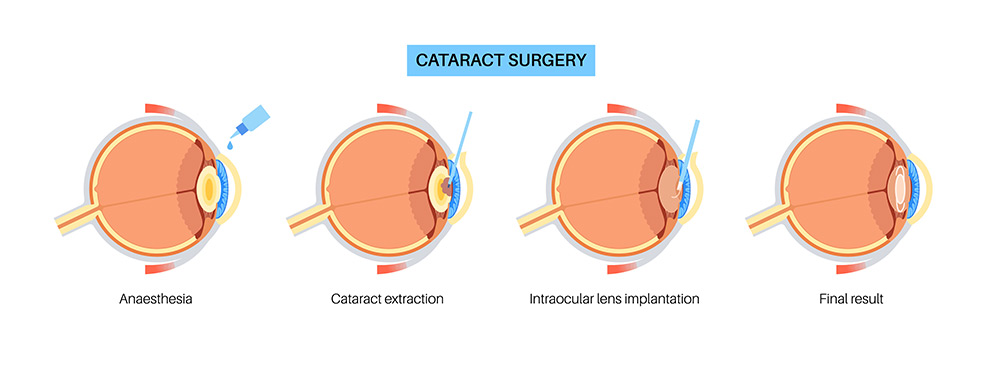
Cataract surgery removes the cloudy natural lens and replaces it with a clear intraocular lens.
Pre-Operative Preparation: What Happens Before the Day?
Once cataract surgery is planned, you will be given instructions about how to prepare for the procedure. This may include guidance around arrival time, usual medications, eye drops, fasting instructions if required and what to expect when you arrive for surgery. These instructions are designed to make the day more straightforward and reduce uncertainty beforehand.
You will also need to arrange for someone to take you home after surgery. Cataract surgery is usually performed as a day procedure, but your vision may be blurred immediately afterwards, and you should not drive yourself home. By the time surgery day arrives, the key measurements, lens selection and treatment plan should already have been completed.
Surgery Day: What Happens During Cataract Surgery?
The cataract procedure itself is usually brief, but it involves several precise steps. Modern cataract eye surgery is commonly performed through very small incisions, using specialised instruments to remove the cloudy lens and place the new intraocular lens inside the eye.
Step 1: Anaesthetic and Sedation Are Used
Cataract surgery is usually performed using a local anaesthetic to numb the eye. A sedative may also be used to help you feel more settled during the procedure. You do not need to see the surgical details while treatment is taking place, and your comfort is monitored throughout.
Step 2: A Tiny Incision Is Made
A very small opening is made in the eye so the cataract can be accessed. At Ashford Advanced Eye Care, micro-incision cataract surgery may involve openings as small as 1.8 mm, which helps reduce disruption to the surrounding eye structures.
Step 3: The Cloudy Lens Is Broken Up and Removed
The cloudy natural lens is then broken up using ultrasound energy. This technique is known as phacoemulsification, although many people simply think of it as ultrasound cataract surgery. The softened lens material is gently removed from the eye through the small incision.
Step 4: The Intraocular Lens Is Inserted
Once the cloudy lens has been removed, the replacement intraocular lens is inserted. The IOL implant is usually folded before it enters the eye, then it unfolds into the position where the natural lens used to sit. This is the lens replacement stage of cataract surgery.
Step 5: The Incision Usually Heals Without Stitches
The small incision used during cataract removal surgery usually seals and heals naturally. Stitches are rarely needed, although this can depend on the individual eye and the details of the procedure.
Step 6: The Procedure Is Usually Brief
Cataract surgery typically takes around 15 to 20 minutes per eye. The full visit may take longer because of preparation, monitoring and recovery time after the procedure, but the surgery itself is usually completed relatively quickly.
During cataract surgery, ultrasound energy is used to break up and remove the cloudy natural lens.
After Surgery: Getting Home and Starting Recovery
After cataract surgery, you will spend a short period being monitored before going home. Your vision may be cloudy, blurry or light-sensitive at first, which is why someone else will need to drive you home. This early stage is mainly about allowing the eye to settle and following the instructions provided after the procedure.
You will usually be given prescribed eye drops to support healing and reduce inflammation. It is important to use these as directed and attend your follow-up appointments, as these checks allow us to monitor recovery, assess vision and make sure the eye is healing as expected.
Cataract Surgery Recovery: What to Expect in the First Few Weeks
Cataract surgery recovery varies from person to person, but many people notice an improvement in vision within 24 to 48 hours. Vision can still fluctuate during the early healing period, and mild dryness, grittiness, glare, light sensitivity or temporary blurring can occur as the eye settles.
Full recovery is usually expected in around four weeks. During this time, your vision may continue to sharpen and stabilise, while follow-up appointments are used to check healing and confirm that the intraocular lens is sitting in the correct position. Any pain, sudden vision changes or worsening symptoms should be reported to us promptly.
Having Cataract Surgery on the Second Eye
If cataracts affect both eyes, surgery is usually planned separately for each eye. Treating one eye at a time allows the first eye to begin healing before the second cataract operation is performed, while also allowing us to assess early recovery and visual improvement before proceeding.
The timing of second-eye cataract surgery depends on your vision, cataract severity, recovery from the first procedure and overall treatment plan. This is discussed as part of your consultation and follow-up care, so the timing can be planned around your individual needs rather than treated as a fixed schedule.
Clearer Steps Make Cataract Surgery Easier to Understand
Cataract surgery can sound daunting until the process is broken down clearly. In simple terms, the procedure involves careful assessment, lens planning, local anaesthetic, removal of the cloudy natural lens, placement of a clear intraocular lens and monitored aftercare.
At Ashford Advanced Eye Care, cataract surgery is planned around the health, structure and visual needs of each eye. If you are considering cataract surgery in Adelaide, you can contact us for more information or book an assessment online to discuss your vision, cataract severity and treatment options.
FAQs
Are both eyes treated during the same cataract surgery appointment?
Cataract surgery is usually performed on one eye at a time. If both eyes need treatment, the second cataract operation is normally planned separately, with timing based on your vision, cataract severity and recovery from the first procedure.
Can cataract surgery correct astigmatism?
Cataract surgery may help address astigmatism if a toric intraocular lens is suitable for your eye. This is discussed during lens planning, where your eye measurements, corneal shape and visual needs are assessed before a lens recommendation is made.
Will I need glasses after cataract surgery?
Some people still need glasses for reading, distance vision or certain tasks after cataract surgery. This depends on the type of intraocular lens used, your eye health, your visual needs and whether you have other conditions affecting vision.
Is cataract surgery done while you are awake?
Cataract surgery is usually performed while you are awake, with a local anaesthetic used to numb the eye. A sedative may also be used to help you feel more settled, and your comfort is monitored throughout the cataract procedure.
How soon can I return to normal activities after cataract surgery?
Many people return to gentle daily activities within a few days, but recovery advice depends on the eye and the procedure. We provide instructions about eye drops, driving, exercise, water exposure and follow-up appointments after surgery.