
Presbyopia Treatment

Comfortable Reading and Clearer Near Vision With the Right Treatment Approach
- 40+ years experience with over 30,000 eye surgeries
- Surgical results published word wide in scientific literature
- Published 100+ research papers in scientific journals
- Trusted to train doctors worldwide in advanced laser vision techniques
Presbyopia is a common age-related vision change that makes it harder to focus on close-up tasks such as reading, using a phone or working on a computer. Many people first notice they are holding books further away, needing brighter light or feeling more visual strain during everyday near work.
At Ashford Advanced Eye Care, presbyopia treatment in Adelaide begins with understanding how your near vision has changed and how it affects your daily routine. Care is focused on accurate diagnosis, personalised treatment planning and helping you maintain clear, comfortable vision across both work and everyday life.
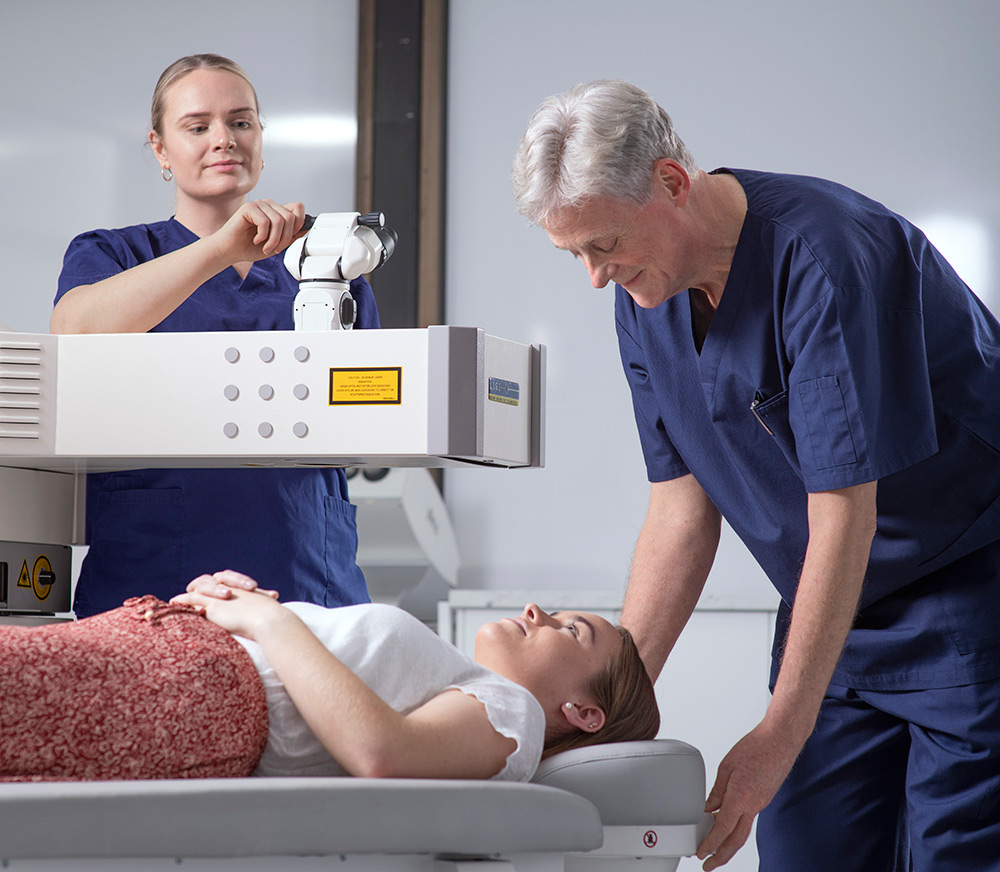
For some patients, reading glasses or contact lenses provide simple and effective support for near tasks. For others, particularly where reducing reliance on glasses is a priority, laser vision correction or lens-based treatment options may be considered following a detailed suitability assessment.
What Is Presbyopia?
Presbyopia is the gradual loss of the eye’s ability to focus clearly on nearby objects. It happens as the natural lens inside the eye becomes less flexible with age, making it harder to adjust focus between distance and close-up tasks.
Unlike short-sightedness or long-sightedness, presbyopia is a normal part of ageing and usually becomes noticeable from the early to mid-40s onwards. It can affect people who have never needed glasses before, as well as those who already wear prescription lenses for other refractive errors.
Why Near Vision Changes
Should Be Properly Assessed
Many people assume that difficulty reading small print is simply something they have to accept with age. While presbyopia is common, changes in near vision can also overlap with other refractive issues or eye health concerns that should be properly assessed.
A detailed eye examination helps confirm whether presbyopia is the main cause of symptoms and whether additional correction is needed for distance vision, astigmatism or other underlying conditions. Accurate diagnosis supports better treatment planning and helps avoid unnecessary visual strain.
Common Signs and Symptoms of Presbyopia
Presbyopia often develops gradually, which means symptoms can be easy to dismiss at first. Most people notice changes during reading, screen use or other close-up tasks that previously felt effortless.
Common signs may include:
- Holding reading material further away to bring the text into clearer focus.
- Difficulty reading small print on menus, labels or messages that were previously easy to see.
- Eye strain or tired eyes after prolonged reading, computer work or other close-up tasks.
- Headaches linked to sustained focusing effort, particularly later in the day.
- Needing brighter light for comfortable reading, especially in the evening or lower light settings.
- Taking longer to switch focus between near and distance vision.
How Presbyopia Is Diagnosed
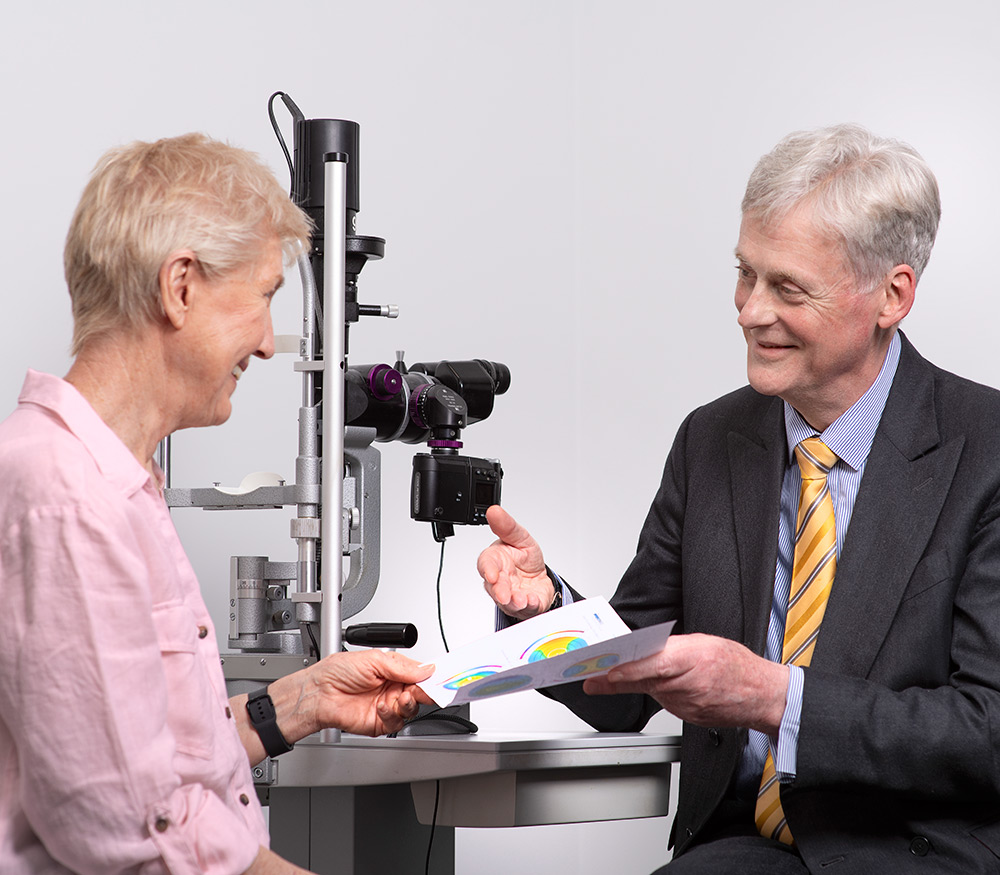
Diagnosing presbyopia involves a comprehensive eye assessment that looks at more than reading difficulty alone. Testing checks near vision, distance prescription, focusing ability and how the eyes work together across different visual tasks.
Your ophthalmologist will also assess overall eye health, including the lens and retina, to ensure symptoms are not being caused by other age-related eye conditions. This allows treatment recommendations to be based on both visual function and long-term eye health.
Presbyopia Treatment Options
Presbyopia treatment is designed to improve near vision while maintaining comfortable, functional sight throughout daily life. The most suitable option depends on your prescription, lifestyle, work demands, and whether reducing dependence on glasses is an important goal.
Reading Glasses and Contact Lenses
Reading glasses are often the simplest first step for managing presbyopia, helping to reduce strain and improve clarity for close-up tasks such as reading, screen use and detailed work. Some patients may also benefit from multifocal glasses where both distance and near correction are needed.
Multifocal or monovision contact lenses may also be suitable for some patients, depending on prescription and comfort. Regular reviews help ensure your correction continues to match your changing visual needs over time.
Laser Vision Correction and Lens-Based Treatments
For some adults, laser vision correction may help reduce reliance on reading glasses, particularly through approaches such as monovision or blended vision treatment planning. Suitability depends on prescription stability, corneal health and how well your eyes adapt to different focusing strategies.
In some cases, lens-based procedures such as refractive lens exchange may also be considered. A detailed consultation is essential to assess which option is most appropriate and to ensure treatment decisions support safe, long-term visual outcomes.
Why Choose Us for Your Presbyopia Treatment
At Ashford Advanced Eye Care, presbyopia treatment is guided by detailed assessment, consultant-led care and treatment planning that reflects how you use your vision every day. The focus is not simply on reading glasses, but on finding the most practical and effective long-term solution for your lifestyle.
Patients benefit from:
- Consultant-led care: Personalised assessment and continuity throughout diagnosis and treatment planning.
- Advanced diagnostic technology: Detailed testing to assess near vision changes and broader eye health.
- Tailored treatment recommendations: Clear guidance on glasses, contact lenses, laser correction and lens-based options.
- Long-term vision support: Treatment planning designed around comfort, function and future eye health.
Meet Associate Professor Michael Goggin

Experienced in Corneal Cross-Linking for Keratoconus
Associate Professor Michael Goggin has extensive experience performing corneal cross-linking, a procedure used to help slow the progression of keratoconus. He carefully assesses suitability for treatment and guides patients through each stage of the process, with a strong focus on safety, clear communication, and informed decision-making.
His approach combines clinical precision with compassionate care, helping patients understand how cross-linking works, what to expect during recovery, and how the procedure fits into their overall eye care plan.
How to Book an Appointment
Booking an appointment for presbyopia treatment in Adelaide is simple and convenient. We welcome new patients and referrals for the diagnosis, treatment and ongoing management of presbyopia and other age-related vision concerns.
Consultation fees vary depending on the type of appointment and will be discussed when booking. A referral from your GP or optometrist is required for consultations to be eligible for Medicare rebates, and our team can help guide you through this process.
To arrange an appointment or referral:
- Call the clinic directly on Tel: 8293 2700
- Book online via the Book an Assessment page
- Submit a general enquiry through the Contact Us page
- Complete your details on the Referral Page to generate a referral form
Frequently Asked Questions
Can presbyopia be corrected permanently?
Presbyopia happens as the natural lens inside the eye becomes less flexible with age, so it does not reverse on its own. While reading glasses help manage symptoms, some patients may be suitable for laser vision correction or lens-based procedures that can reduce long-term dependence on glasses.
Is presbyopia the same as long-sightedness?
No, presbyopia and long-sightedness are different conditions. Presbyopia is an age-related change in near focusing ability, while long-sightedness (hyperopia) is a refractive error linked to the shape of the eye and can occur at any age.
When does presbyopia usually start?
Most people begin to notice presbyopia in their early to mid-40s, although the timing can vary depending on existing prescriptions and daily visual demands. Difficulty reading small print or needing more light are often the first noticeable signs.
Can contact lenses help presbyopia?
Yes, multifocal or monovision contact lenses may help improve near vision for some patients with presbyopia. Suitability depends on your prescription, eye health and whether contact lenses are comfortable for your daily routine.
Can laser eye surgery treat presbyopia?
Laser eye surgery may help some patients reduce reliance on reading glasses, particularly through monovision or blended vision approaches. A detailed assessment is needed to determine whether laser correction or a lens-based treatment is the most suitable option.
Ready to Take the Next Step?
Schedule a comprehensive consultation to discuss your Presbyopia treatment options.