Two Common Eye Conditions, Two Very Different Problems
Cataracts and glaucoma are two of the better-known eye conditions, but they affect vision in very different ways. Cataracts involve clouding of the eye’s natural lens, while glaucoma involves damage to the optic nerve, the structure that carries visual information from the eye to the brain.
Understanding glaucoma vs cataracts is important because blurred or reduced vision can have more than one cause. The pattern of symptoms, the parts of the eye involved, and the treatment pathway can all differ, which is why careful assessment is needed before deciding what should happen next.
What is the Main Difference Between Cataracts and Glaucoma?
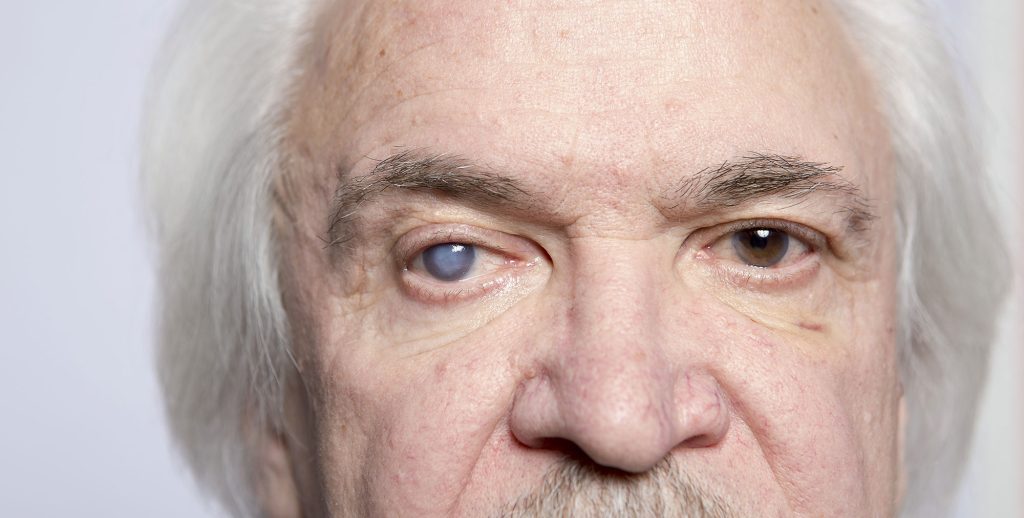
A cataract develops when the natural lens inside the eye becomes cloudy. As that clouding increases, light is no longer focused as clearly, and vision may become hazy, blurred, dim or affected by glare. Many people first notice cataracts when everyday tasks such as reading, driving at night or seeing detail in bright light become more difficult.
Glaucoma is a disease of the optic nerve. It is often associated with increased pressure inside the eye, although pressure is not the only factor. Rather than making the eye’s lens cloudy, glaucoma can damage the pathway that transmits visual information to the brain, which is why it needs a different type of assessment and management.
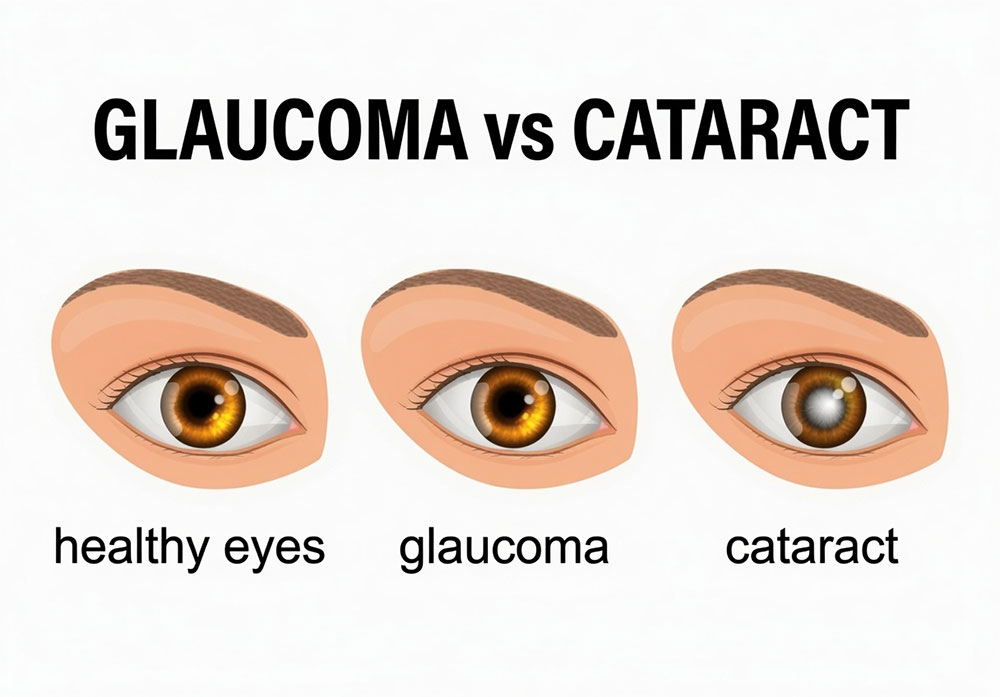
Cataracts affect the eye’s natural lens, while glaucoma affects the optic nerve and may progress without obvious early symptoms.
Cataract Symptoms vs Glaucoma Symptoms
The symptoms of cataracts and glaucoma can both be described broadly as “vision changes”, but the pattern is usually different. Cataracts tend to reduce the clarity and quality of vision, while glaucoma may affect the field of vision, particularly side vision, and may not cause obvious symptoms in its early stages.
Common differences include:
- Cataracts: Cloudy or blurred vision, glare around lights, reduced contrast, duller colours, difficulty reading, trouble recognising faces or increasing difficulty with night driving.
- Glaucoma: Gradual loss of peripheral vision, reduced awareness of objects away from the centre of sight, narrowed vision in more advanced disease or no obvious symptoms in the early stages.
Why Glaucoma Can Be Harder to Notice Early
Glaucoma can be difficult to detect without proper testing because early changes may not affect central vision straight away. A person may still read, use a computer or watch television without realising that subtle peripheral vision changes are developing.
The brain can also adapt to small gaps in vision, which means early loss may not be obvious during normal daily activities. This is one of the reasons routine eye checks are important, particularly for people with a family history of glaucoma, increasing age or other eye health risk factors.
How Cataracts and Glaucoma are Diagnosed
Cataracts are diagnosed by examining the eye’s natural lens and assessing how much the clouding is affecting vision. This may include checking visual clarity, glare symptoms and the impact on daily activities such as reading, driving and recognising detail.
A glaucoma diagnosis involves a more detailed assessment of optic nerve health. This may include eye pressure measurement, optic nerve examination, visual field testing and imaging to assess or monitor structural changes over time.
A comprehensive assessment is important because blurred or reduced vision does not always have one obvious cause. Dry eye, corneal disease, retinal conditions, prescription changes, cataracts and glaucoma can all affect sight in different ways.
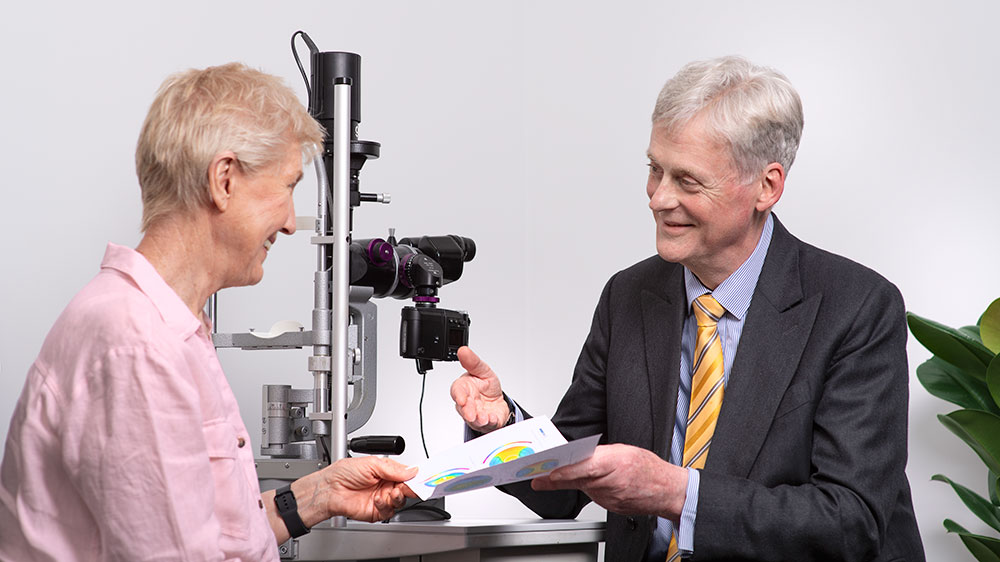
A comprehensive eye assessment can help distinguish between cataracts, glaucoma and other causes of vision change.
Are Cataracts or Glaucoma More Serious?
Cataracts and glaucoma are serious in different ways. Cataracts can gradually interfere with daily function, especially when glare, reduced clarity, or poorer contrast begin to affect reading, driving or recognising faces. When a cataract is meaningfully affecting vision, cataract treatment is designed to address the cloudy lens itself.
Glaucoma needs a different kind of caution because existing optic nerve damage is generally not reversible. Treatment focuses on reducing the risk of further damage and preserving remaining vision. That makes early detection and ongoing monitoring especially important, even when a person feels their vision is still reasonably clear.
Can You Have Cataracts and Glaucoma at the Same Time?
Yes, a person can have cataracts and glaucoma at the same time. They are separate conditions, but both are seen more often with age, so it is not unusual for an ophthalmologist to assess lens clarity, eye pressure and optic nerve health during the same examination.
When both conditions are present, treatment planning needs to account for the whole eye. Cataract surgery may improve vision affected by a cloudy lens, but glaucoma still needs to be monitored and managed separately. The right pathway depends on the severity of each condition, the examination findings and the person’s overall eye health.
How Treatment Approaches Differ
Treatment depends on the diagnosis, the severity of the condition and how the person’s vision is being affected. Cataract treatment and glaucoma treatment are not interchangeable because they address different parts of the eye.
Cataract Treatment Focuses on the Cloudy Lens
Cataract treatment usually involves replacing the cloudy natural lens with a clear artificial lens when symptoms and examination findings show that surgery is appropriate. The aim is to improve visual clarity by treating the lens opacity that is interfering with sight.
Glaucoma Treatment Focuses on Protecting the Optic Nerve
Glaucoma treatment is usually focused on lowering eye pressure and reducing the risk of further optic nerve damage. Depending on the type and severity of glaucoma, this may involve prescription eye drops, laser treatment, surgery or careful monitoring over time.
When Should You Arrange an Eye Assessment?
An eye assessment is important if you notice cloudy vision, increasing glare, trouble driving at night, reduced contrast, unexplained blurred vision or changes in side vision. These symptoms may relate to cataracts, glaucoma or another eye condition, so assessment is the safest starting point.
It is also sensible to arrange an assessment if you have a family history of glaucoma, are becoming more aware of changes in your vision or have not had your eyes checked for some time. At Ashford Advanced Eye Care, we assess the eye as a whole so the cause of vision change can be properly identified.
Clear Diagnosis is the First Step
Cataracts and glaucoma can both affect vision, but they do so in different ways. Cataracts affect the natural lens and tend to reduce clarity, brightness and contrast. Glaucoma affects the optic nerve and may progress before obvious symptoms develop, which is why testing and monitoring play such an important role.
If you are experiencing changes in your vision, are unsure whether your symptoms may be related to cataracts or glaucoma, or would like clearer guidance about your eye health, please contact us for more information or book an assessment online.
FAQs
Can cataracts lead to glaucoma?
Cataracts do not usually “turn into” glaucoma, as they affect different parts of the eye. However, changes in the lens can sometimes influence the drainage angle or eye pressure in certain eyes. This is one reason an eye assessment looks at the whole eye, not just the cataract itself.
Can you have cataract surgery if you have glaucoma?
Many people with glaucoma can still be assessed for cataract surgery, but planning needs to take optic nerve health and eye pressure into account. The ophthalmologist will consider how much of the vision change is due to cataract, how stable the glaucoma is and what monitoring may be needed afterwards.
Why do cataracts and glaucoma become more common with age?
Cataracts become more common as the natural lens changes over time and gradually loses clarity. Glaucoma risk can also increase with age, although family history, eye pressure, optic nerve structure and other factors may also be involved. The two conditions are age-related in different ways.
Can cataracts affect peripheral vision?
Cataracts usually affect overall clarity, glare, contrast and brightness rather than causing a true loss of side vision. Peripheral vision changes are more concerning for glaucoma or other eye conditions. If side vision feels reduced, it should be assessed rather than assumed to be part of a cataract.
Is vision loss from cataracts different from vision loss from glaucoma?
Yes. Cataract-related vision loss is caused by clouding of the natural lens, so treatment focuses on replacing that cloudy lens when appropriate. Glaucoma-related vision loss involves damage to the optic nerve, which is generally not reversible. This is why early detection and monitoring are particularly important in glaucoma.