Clearer Vision Without So Much Daily Effort
Glasses and contact lenses can be very effective, but they can also become part of almost every daily decision. From exercising and travelling to working at a screen, driving, reading signs or dealing with dry, irritated contact lenses, corrective eyewear is not always as simple as it looks from the outside.
Laser eye surgery is designed to reduce dependence on glasses and contact lenses for suitable adults. In this blog, we explain the benefits of laser eye surgery, how it may support clearer unaided vision and why a detailed assessment is essential before deciding whether laser vision correction is appropriate for your eyes.
What Laser Eye Surgery is Designed to Correct
Laser eye surgery, also known as laser vision correction or refractive surgery, uses precise laser technology to reshape the cornea. The cornea is the clear front surface of the eye, and its shape plays an important role in how light is focused onto the retina.
When light does not focus correctly, vision can appear blurred at certain distances. Laser eye surgery may be used to correct short-sightedness (myopia), long-sightedness (hyperopia) and astigmatism, depending on the person’s prescription, corneal thickness, eye health and overall suitability. At Ashford Advanced Eye Care, this is assessed carefully before any treatment is recommended.
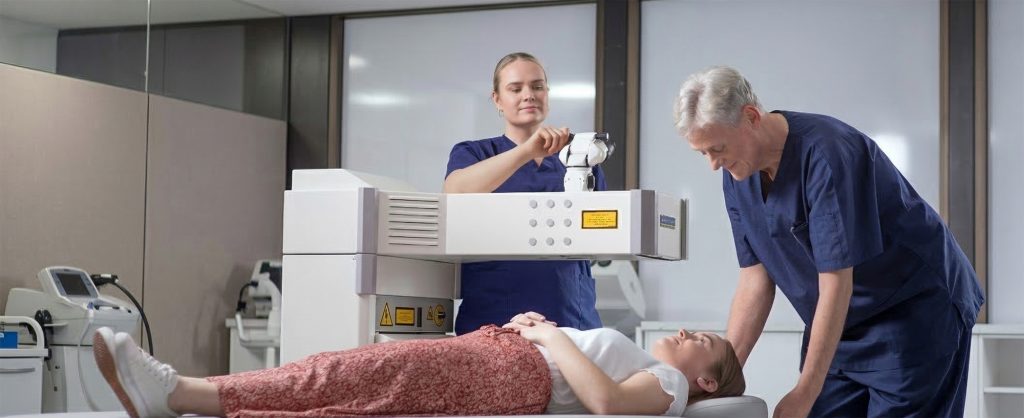
Laser eye surgery can reduce dependence on glasses and contact lenses, helping make everyday vision feel simpler.
10 Benefits of Laser Eye Surgery
The benefits of laser eye surgery are not only about seeing more clearly without glasses. For many suitable individuals, the value is also practical, with fewer eyewear interruptions, less planning around contact lenses and a treatment pathway based on careful diagnostic assessment.
1. Clearer Unaided Vision for Suitable Candidates
Laser vision correction is designed to improve how light focuses inside the eye. By reshaping the cornea, laser treatment can support clearer unaided vision for suitable candidates, although results depend on prescription, corneal measurements, eye health and individual healing response.
2. Reduced Dependence on Glasses
One of the main laser eye surgery benefits is reduced dependence on prescription glasses. For people who wear glasses throughout the day, laser vision correction may make everyday tasks such as driving, exercising, working and reading signs easier to manage without always needing corrective eyewear.
3. Reduced Dependence on Contact Lenses
Contact lenses can be helpful, but they also involve cleaning, storage, replacement lenses, dry eye management and daily handling. Laser eye surgery may reduce the need for contact lenses, which can be particularly useful for people who find them uncomfortable, inconvenient or difficult to manage during long days, sport or travel.
4. Long-Term Value Compared With Glasses and Contact Lenses
Laser eye surgery involves an upfront cost, but it can be more cost-effective over time than repeatedly paying for glasses, contact lenses, lens solutions, prescription sunglasses and replacement eyewear. For many people, the long-term value is one of the practical benefits of laser vision correction.
5. Correction for Different Refractive Errors
Laser eye surgery may be considered for several types of refractive error, including myopia, hyperopia and astigmatism. This means treatment can often be planned around the individual eye rather than a single vision concern, provided the prescription, corneal structure, and overall eye health are suitable.

Laser eye surgery can make daily routines easier by reducing the need to manage glasses, lenses, solutions and spare eyewear.
6. Less Ongoing Planning Around Corrective Eyewear
Glasses and contact lenses often require more organisation than people realise, especially when travelling, exercising or spending long days away from home. Laser eye surgery may reduce the need to pack spare lenses, carry solution, remember backup glasses or plan activities around corrective eyewear.
7. Fewer Everyday Eyewear Interruptions
Glasses can fog, slide, scratch, break or get in the way during certain activities, while contact lenses can dry out or require backup supplies. Laser vision correction may reduce these everyday interruptions for suitable individuals, particularly during exercise, travel, outdoor work and changing weather conditions.
8. A Quick Treatment Process
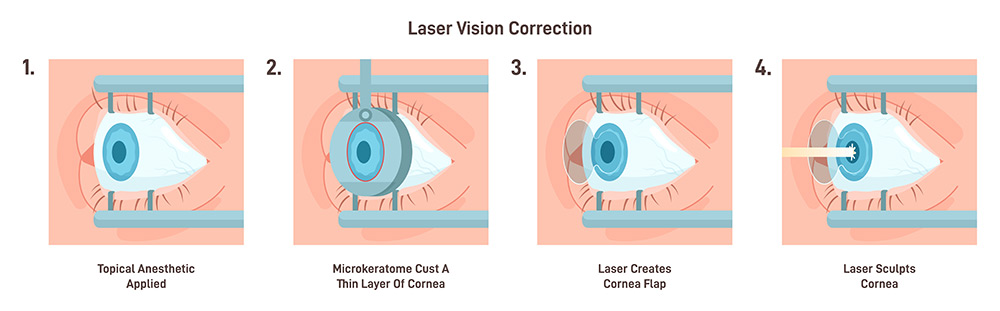
Although planning and assessment are detailed, the laser treatment itself is usually brief. Anaesthetic drops are used before treatment, and the laser component is typically completed quickly, which can be reassuring for people who feel nervous about the idea of laser surgery.
9. A Structured Recovery Pathway
Laser eye surgery recovery depends on the type of procedure performed. LASIK eye surgery often has a shorter early recovery period, while PRK laser eye surgery and no-touch laser eye surgery involve healing of the corneal surface, with recovery guidance provided based on the chosen technique.
10. Different Treatment Options Can Be Considered
Laser eye surgery is not one identical procedure for every person. At Ashford Advanced Eye Care, options may include LASIK and Customised Trans-Epithelial No-Touch PRK/cTEN, with the recommended pathway depending on prescription, corneal thickness, eye shape, lifestyle needs and overall suitability.
When Laser Eye Surgery May Not Be Suitable
Laser eye surgery is not appropriate for everyone. Some people may be unsuitable due to thin corneas, unstable prescriptions, significant dry eye, certain corneal conditions, uncontrolled glaucoma or other eye health factors. Pregnancy and breastfeeding may also affect timing, as hormonal changes can influence vision and tear film stability.
This is why a proper assessment is essential. The aim is not simply to decide whether someone wants laser eye surgery, but whether their eyes are suitable for treatment. In some cases, it may be better to delay treatment, manage another eye condition first or consider a different form of vision correction.
Choosing the Right Laser Vision Correction Pathway
The benefits of laser eye surgery can be significant for suitable individuals, particularly when treatment reduces daily dependence on glasses or contact lenses. However, the most important part of the process is careful assessment, realistic advice and choosing the right technique for the individual eye.
At Ashford Advanced Eye Care, laser vision correction is planned around each person’s prescription, corneal measurements and overall eye health. If you are considering laser eye surgery in Adelaide, you can contact us for more information or book an assessment online to find out whether treatment may be appropriate for your eyes.
FAQs
Is laser eye surgery painful?
Laser eye surgery is usually performed with anaesthetic eye drops to help keep the eye comfortable during treatment. Some pressure, watering, grittiness or light sensitivity may be noticed afterwards, with the recovery experience depending on whether LASIK, PRK or no-touch PRK/cTEN is performed.
What is the difference between LASIK and PRK?
LASIK involves creating a thin flap in the cornea before reshaping the tissue underneath, while PRK treats the surface of the cornea without creating a flap. No-touch PRK/cTEN is a surface laser technique, and suitability depends on factors such as corneal thickness, prescription and eye health.
Can laser eye surgery treat astigmatism?
Laser eye surgery may be suitable for most people with astigmatism, depending on the shape of the cornea, prescription stability and overall eye health. A detailed assessment is needed to confirm whether laser vision correction is appropriate and which technique may be most suitable.
Will I still need reading glasses after laser eye surgery?
Laser eye surgery can reduce dependence on glasses for distance vision, but it does not stop the natural age-related focusing changes that can affect near vision. Some people may still need reading glasses later in life, particularly as presbyopia develops.
How do I know if I am suitable for laser eye surgery?
Suitability depends on your prescription, corneal thickness, tear film, eye health, prescription stability and any underlying conditions. A laser eye surgery consultation allows these factors to be assessed properly before any treatment recommendation is made.