A Clear Explanation of What The Laser Changes and Why Vision Improves
Laser eye surgery is widely known as a way to reduce reliance on glasses or contact lenses, but many people are less clear on what the procedure is actually doing inside the eye. Understanding the science behind it helps explain why modern laser treatment can produce such precise and predictable visual changes.
So, how does laser eye surgery work? In this latest blog, we explain how laser vision correction reshapes the cornea to change the way light focuses inside the eye and why that small adjustment can make such a meaningful difference to visual clarity.
We’ll walk through the science behind the procedure, what happens during treatment and how different vision problems are corrected, so the process is easier to understand from start to finish.
Understanding How the Eye Focuses Light
Clear vision depends on light being bent, or refracted, so it lands sharply on the retina at the back of the eye. The cornea does most of this focusing work, with the natural lens inside the eye providing fine adjustment, especially for near tasks. When the focusing system is well aligned, the image on the retina is crisp, and the brain interprets it as clear vision.
Refractive errors happen when the eye’s focusing power and its length do not match perfectly. If the cornea’s curvature is slightly too strong or too weak, or if the eye is a little longer or shorter than average, light does not land in the ideal position on the retina. That is when people notice blur, distortion, or visual strain, depending on the type of refractive error.
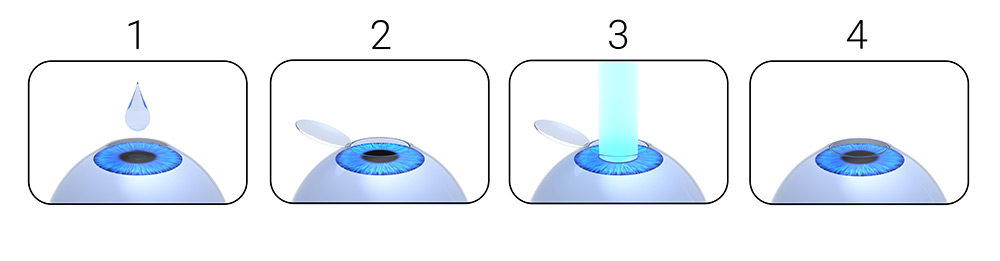
Laser eye surgery works by reshaping the cornea so light focuses more accurately inside the eye.
What Laser Eye Surgery Actually Changes
Laser vision correction works by changing the cornea’s shape with extraordinary precision. The laser removes microscopic amounts of tissue to adjust the curvature of the cornea, which changes how strongly it bends light. Even tiny adjustments can shift the focal point enough to transform how clearly the eye sees at distance, up close, or both.
It helps to picture the cornea as the main focusing surface of the eye. When its curvature is adjusted in a controlled way, light can be guided to focus more accurately on the retina rather than in front of it or behind it. The laser does not “strengthen” vision; it improves the optical pathway so the eye can form a clearer image with less reliance on external correction.
How Laser Eye Surgery Corrects Different Vision Problems
Laser eye surgery follows the same principle for all refractive errors, reshaping the cornea so light focuses more accurately on the retina. The specific adjustment depends on whether the eye is focusing too strongly, too weakly, or unevenly, which is why treatment patterns differ slightly for each type of vision problem.
Myopia (Short-Sightedness)
In myopia, light focuses in front of the retina, causing distance blur. Laser treatment gently flattens the central cornea to reduce focusing power, allowing light to travel further back so it lands more precisely on the retina.
Hyperopia (Long-Sightedness)
With hyperopia, light focuses behind the retina, which can make near tasks feel strained or unclear. The laser slightly steepens the cornea to increase focusing power and bring the focal point forward onto the retina.
Astigmatism
Astigmatism occurs when the cornea has an uneven shape, leading to distorted or stretched vision. Laser correction smooths and reshapes the corneal surface so light is focused more evenly, improving overall clarity.

Small changes to corneal shape can create a significant improvement in how clearly the eye sees.
What Happens During the Procedure
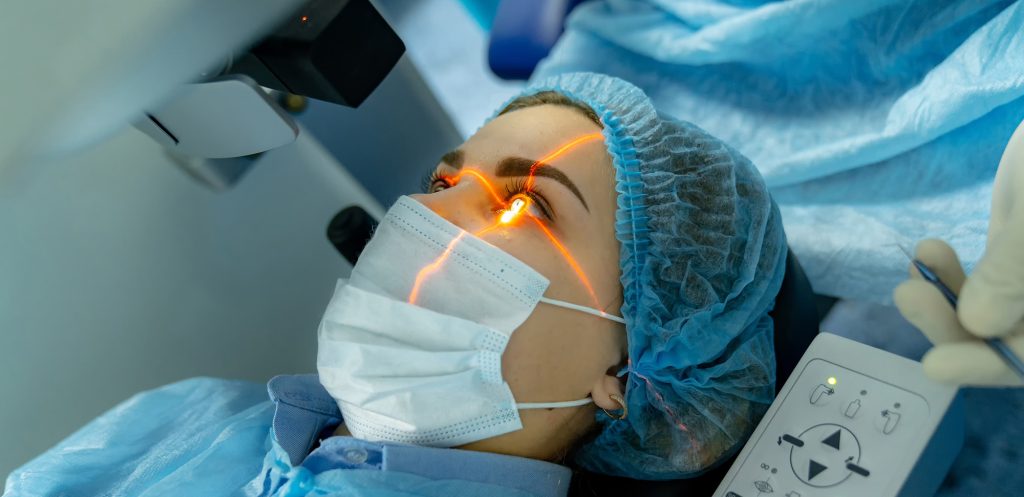
Before the laser is applied, the eye is prepared so the treatment can be delivered accurately and comfortably. Anaesthetic drops are used to numb the surface of the eye, and the surgical team ensures the eye is positioned correctly. The laser plan is based on detailed measurements taken beforehand, which guide exactly how the cornea will be reshaped.
During the treatment itself, advanced systems help maintain alignment and account for small natural eye movements. The active laser time is usually brief, often seconds per eye, yet the preparation and checks around it are what ensure accuracy. Most people notice that the experience is controlled and methodical rather than dramatic or intense.
Why Modern Lasers Are So Precise
The precision of laser eye surgery comes from the combination of detailed measurement and tightly controlled energy delivery. Modern systems are designed to reshape tissue at a microscopic level, with treatment patterns customised to the individual cornea. This is supported by mapping and tracking technologies that help align the laser treatment to the intended optical zone.
Several factors contribute to that accuracy:
- Detailed corneal mapping measures the curvature and shape of the eye to guide the treatment plan.
- Computer-guided treatment profiles apply reshaping patterns that are matched to the individual prescription.
- Eye tracking technology helps maintain precise alignment during natural micro-movements.
- Microscopic tissue removal allows the cornea to be reshaped in extremely small, controlled increments.
Does Laser Eye Surgery Permanently Change Vision?
Laser vision correction permanently changes the shape of the cornea, which means the optical adjustment itself does not simply “wear off” like a temporary effect. The cornea is reshaped to a new curvature, and that altered curvature continues to influence how light focuses as it enters the eye. For many people, this is why results can be long-lasting.
At the same time, the eye can still change with age for reasons unrelated to the cornea. The natural lens becomes less flexible over time, which affects near focus and commonly leads to reading vision changes later in adulthood.
Those age-related changes can occur whether or not someone has had laser vision correction, and they are best understood as part of normal visual ageing rather than reversal of the corneal reshaping.
When to Book an Eye Assessment
Understanding how laser eye surgery works is a helpful first step, but deciding whether it is suitable always comes down to individual eye measurements and overall eye health. If you rely on glasses or contact lenses, notice ongoing visual frustration, or are simply curious about your options, a detailed assessment can provide clear answers based on your own prescription and eye structure.
To arrange an appointment or discuss a referral, you can contact Ashford Advanced Eye Care directly on (08) 8293 2700 or submit an enquiry through the online booking form. New patients and referrals are always welcome, and the team will guide you through the next steps based on your individual needs.
FAQs
How does laser eye surgery actually improve vision?
Laser eye surgery improves vision by reshaping the cornea so light focuses more accurately on the retina. When light is properly aligned, images appear clearer, and the eye relies less on glasses or contact lenses.
What part of the eye does laser eye surgery change?
Laser vision correction changes the shape of the cornea, which is the clear front surface of the eye. The procedure does not replace the lens or add anything inside the eye; it simply adjusts how the cornea bends light.
Is laser eye surgery permanent?
The corneal reshaping performed during laser eye surgery is permanent. However, natural age-related vision changes can still occur over time, which is normal and separate from the original treatment.
How long does laser eye surgery take?
The active laser treatment usually lasts only seconds per eye, although the overall appointment takes longer due to preparation, measurements and positioning. The procedure is carefully planned to ensure accuracy rather than speed.
Does laser eye surgery hurt?
Anaesthetic drops are used to numb the eye before treatment, so most people feel pressure or mild sensations rather than pain. Many patients describe the experience as quicker and more comfortable than expected.