
Astigmatism Treatment

Clearer, More Comfortable Vision Starts With Accurate Diagnosis
- 40+ years experience with over 30,000 eye surgeries
- Surgical results published word wide in scientific literature
- Published 100+ research papers in scientific journals
- Trusted to train doctors worldwide in advanced laser vision techniques
Astigmatism is a common vision condition that can cause blurred or distorted sight at both near and far distances. Many people notice that vision feels less sharp than expected, while others experience ongoing eye strain, headaches or difficulty focusing during reading, screen use or driving.
At Ashford Advanced Eye Care, astigmatism treatment in Adelaide begins with a detailed assessment of how your eyes focus and how your vision performs throughout daily life. Treatment is tailored to improve visual clarity, reduce unnecessary strain and support long-term eye comfort, rather than simply updating a prescription.
For some patients, glasses or contact lenses may provide effective day-to-day correction and improved visual comfort. For others, particularly where reducing dependence on prescription lenses is a priority, laser vision correction may be considered following a detailed suitability assessment and personalised treatment planning.
What Is Astigmatism?
Astigmatism is a refractive error caused by an irregular shape of the cornea or, in some cases, the lens inside the eye. Instead of light focusing evenly onto the retina, it is scattered across multiple points, which can make vision appear blurred, stretched or shadowed at near and far distances.
Some people describe letters appearing doubled, lights looking smeared at night or difficulty maintaining focus for long periods. Astigmatism can occur on its own or alongside short-sightedness (myopia) or long-sightedness (hyperopia), and it may be present from childhood or become more noticeable as visual demands change.
Why Accurate Assessment Matters
Astigmatism does not always present as obvious blurred vision. Many people experience symptoms such as headaches, eye strain, glare at night or difficulty maintaining focus for long periods without immediately realising that astigmatism may be contributing to the problem.
A detailed eye assessment helps identify the exact cause of these symptoms and confirms whether astigmatism is affecting the way light focuses inside the eye. It also helps distinguish routine refractive astigmatism from changes that may require closer review, supporting more accurate treatment planning and long-term visual comfort.
Common Types of Astigmatism
Astigmatism can vary depending on where the focusing irregularity comes from and whether another refractive error is also present. Identifying the pattern helps guide the most suitable treatment approach and supports more accurate long-term management.
The main types of astigmatism include:
- Corneal astigmatism: Caused by an uneven curve in the cornea, which is the most common form.
- Lenticular astigmatism: Occurs when the lens inside the eye has an irregular shape.
- Myopic astigmatism: Astigmatism that occurs alongside short-sightedness.
- Hyperopic astigmatism: Astigmatism that occurs alongside long-sightedness.
- Mixed astigmatism: A combination where one part of the eye focuses as short-sighted and another as long-sighted.
Symptoms and Early Signs of Astigmatism
Astigmatism symptoms can develop gradually, which often makes them easy to overlook at first. Many people assume they simply need stronger glasses when the issue may be related to how the eye is focusing light.
Common signs may include:
- Blurred or distorted vision: Objects may appear unclear, stretched or slightly shadowed.
- Eye strain: Eyes may feel tired or uncomfortable after reading, driving or screen use.
- Headaches: Often linked to prolonged focusing effort, especially later in the day.
- Difficulty seeing at night: Glare, halos or reduced clarity around lights may become more noticeable.
- Frequent squinting: Narrowing the eyes to try to improve sharpness.
- Trouble maintaining focus: Particularly during reading, computer work or detailed visual tasks.
How Astigmatism Is Diagnosed
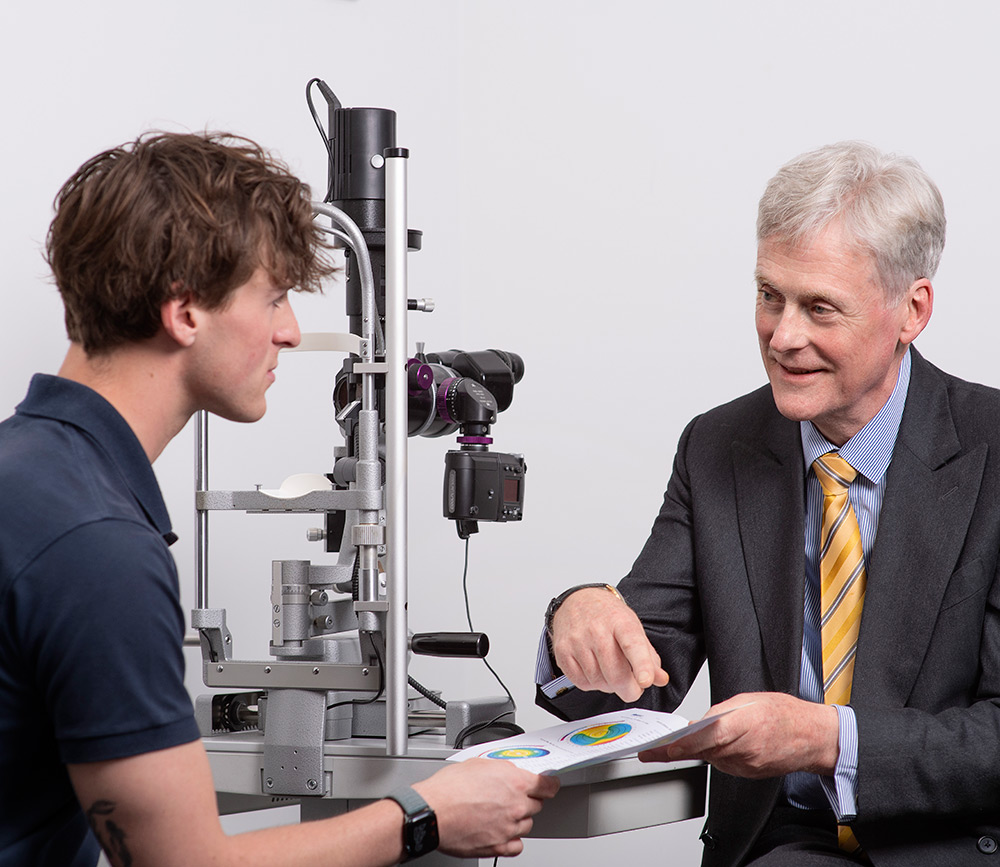
Diagnosing astigmatism involves a comprehensive eye examination that looks at more than just blurred vision. Testing measures your prescription, how light is focusing inside the eye and how your visual system performs across different distances.
Your assessment may also include corneal measurements, particularly when astigmatism is more significant or where laser vision correction is being considered. The health of the retina, lens and other eye structures is also reviewed to rule out other causes of visual disturbance and ensure treatment recommendations are accurate.
Astigmatism Treatment Options
Astigmatism treatment aims to improve clarity, reduce focusing effort and support more stable day-to-day vision. The right approach depends on the degree of astigmatism, your prescription, lifestyle and overall eye health.
Glasses and Contact Lenses
Glasses are often the most effective first step for correcting astigmatism, using specially shaped lenses to help light focus properly onto the retina. This can improve both near and distance vision while reducing headaches and visual fatigue.
Contact lenses may also be suitable for some patients, including toric lenses designed specifically for astigmatism correction. Regular reviews are important to ensure prescriptions remain accurate, comfortable and suited to your daily visual needs.
Laser Vision Correction
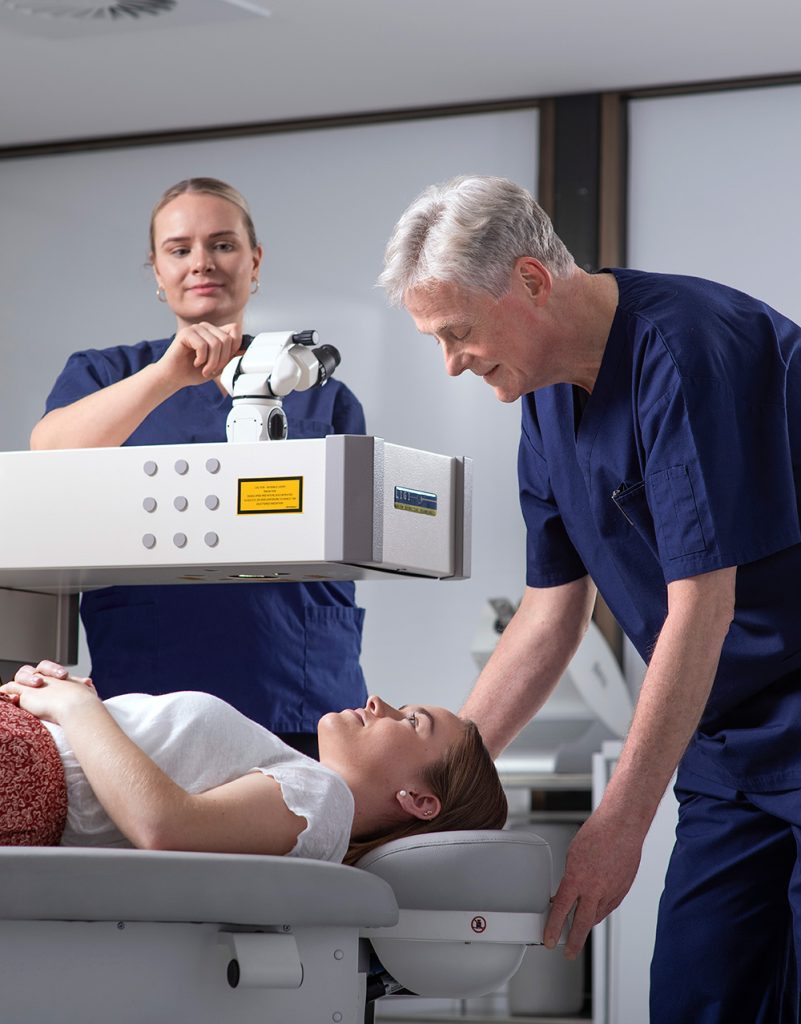
Laser treatment for astigmatism may be an option for some adults with a stable prescription who would prefer to reduce dependence on glasses or contact lenses. Suitability depends on factors such as corneal thickness, prescription stability and overall eye health.
A detailed pre-treatment assessment is essential to determine whether laser vision correction is appropriate and safe. This allows your ophthalmologist to assess whether your eyes are suitable for treatment and discuss the expected visual outcomes in a clear and personalised way.
Why Choose Us for Your Astigmatism Treatment
At Ashford Advanced Eye Care, astigmatism treatment is approached with careful diagnosis, clear clinical guidance and personalised long-term management. Every consultation is designed to understand not only your prescription, but also how your vision affects work, study, driving and everyday comfort.
Patients benefit from:
- Consultant-led care: Consistent assessment and treatment planning from an experienced ophthalmology team.
- Advanced diagnostic capability: Detailed testing to improve prescription accuracy and monitor long-term eye health.
- Practical treatment guidance: Clear advice on glasses, contact lenses and laser suitability based on your individual needs.
- Long-term vision support: Ongoing management focused on stable, comfortable and functional vision.

Meet Associate Professor Michael Goggin

Experienced in Corneal Cross-Linking for Keratoconus
Associate Professor Michael Goggin has extensive experience performing corneal cross-linking, a procedure used to help slow the progression of keratoconus. He carefully assesses suitability for treatment and guides patients through each stage of the process, with a strong focus on safety, clear communication, and informed decision-making.
His approach combines clinical precision with compassionate care, helping patients understand how cross-linking works, what to expect during recovery, and how the procedure fits into their overall eye care plan.
How to Book an Appointment
Booking an appointment for astigmatism treatment in Adelaide is straightforward. We welcome new patients and referrals for the diagnosis, treatment and ongoing management of astigmatism and other refractive vision concerns.
Consultation fees vary depending on the type of appointment and will be discussed when booking. A referral from your GP or optometrist is required for consultations to be eligible for Medicare rebates, and our team can help guide you through this process.
To arrange an appointment or referral:
- Call the clinic directly on Tel: 8293 2700
- Book online via the Book an Assessment page
- Submit a general enquiry through the Contact Us page
- Complete your details on the Referral Page to generate a referral form
Frequently Asked Questions
Can astigmatism get worse with age?
Astigmatism can change over time, particularly as the natural lens inside the eye changes with age. Some people notice more blur, increased glare at night or a greater need for updated prescriptions during routine eye assessments.
Is astigmatism serious?
Mild astigmatism is usually straightforward to manage, but higher levels can affect visual comfort, reading, driving and daily activities if left uncorrected. In some cases, changes in astigmatism may also need further assessment to rule out other corneal conditions.
Do glasses permanently fix astigmatism?
Glasses improve vision by correcting how light focuses onto the retina, but they do not permanently change the shape of the eye or cure astigmatism itself. They provide clear and reliable correction while being worn and may need updating over time.
Can contact lenses help with astigmatism?
Yes, specially designed toric contact lenses can help correct astigmatism by improving how light enters the eye. Suitability depends on the degree of astigmatism, eye health and whether contact lenses are comfortable for your daily routine.
Can laser eye surgery treat astigmatism?
Laser eye surgery may be suitable for some adults with stable astigmatism who want to reduce reliance on glasses or contact lenses. A detailed assessment is needed to check corneal health, prescription stability and overall suitability before treatment is considered.
Ready to Take the Next Step?
Schedule a comprehensive consultation to discuss your Astigmatism treatment options.