
Myopia
(Short-Sightedness) Treatment in Adelaide
Clearer Distance Vision Through Accurate Assessment and Tailored Treatment
- 40+ years experience with over 30,000 eye surgeries
- Surgical results published word wide in scientific literature
- Published 100+ research papers in scientific journals
- Trusted to train doctors worldwide in advanced laser vision techniques
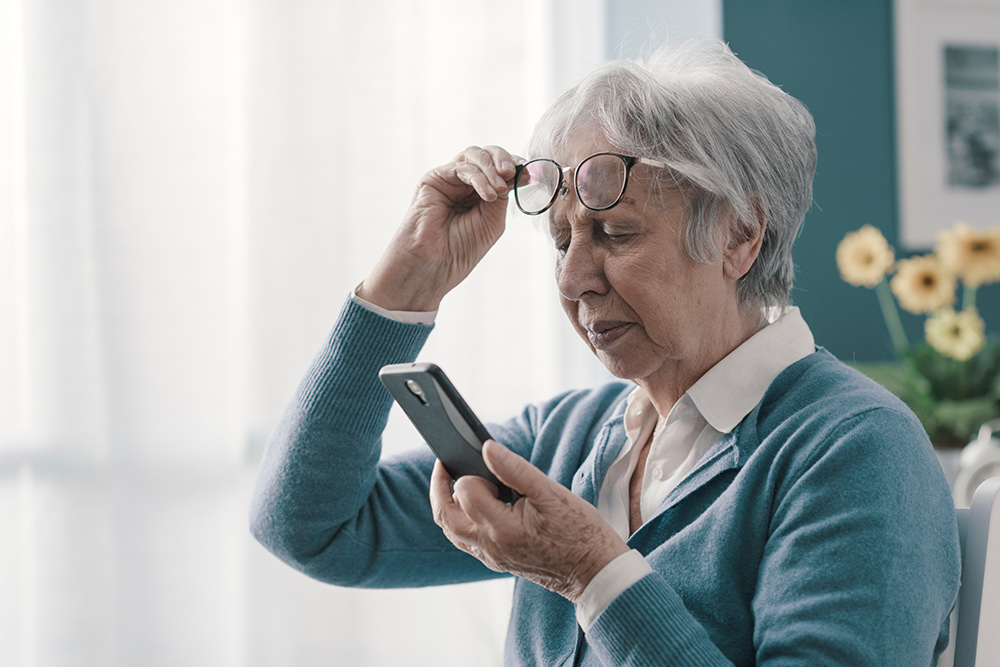
Myopia, also known as short-sightedness, is a common vision condition that makes distant objects appear blurred while close-up vision remains clearer. It can develop at any age, but it most often begins in childhood and may gradually increase over time.
At Ashford Advanced Eye Care, myopia treatment in Adelaide focuses on accurate diagnosis, careful monitoring and personalised treatment planning to support both vision quality and long-term eye health.
For many people, treatment may be straightforward and effective, using glasses or contact lenses, while others may benefit from a more structured approach to myopia management, particularly when prescription changes continue over time.
What Is Myopia (Short-Sightedness)?
Myopia is a refractive error that causes distant objects to look blurred because light focuses in front of the retina rather than directly on it. This is often due to the eye being slightly longer than average, or the cornea being more curved than expected. Myopia can vary in severity and may affect everyday activities such as driving, recognising faces at a distance, seeing classroom boards, or reading signs.
Why Monitoring and Early Assessment Matter
Myopia often develops gradually, and in children and teenagers, it may progress as the eyes continue to grow. An early assessment confirms the cause of distance blur and provides a clear baseline to track changes over time.
Monitoring can also be important for adults with moderate to high myopia, where stronger prescriptions may be linked to a higher risk of certain retinal changes. Regular reviews support both a clear vision and long-term eye health.
Common Types of Myopia
There are several forms of myopia, and understanding the pattern of change can help guide the most suitable short-sightedness treatment approach.
- Simple myopia: A common form that develops in childhood and often stabilises in early adulthood.
- Progressive myopia: Myopia that continues to worsen over time, requiring closer monitoring and updated correction.
- High myopia: A stronger prescription that may involve additional eye health monitoring as part of long-term management.
- Adult-onset myopia: Myopia that develops later in life, sometimes linked to changes in visual demands or refractive stability.
Symptoms and Early Signs of Short-Sightedness
Myopia symptoms can be subtle, particularly in the early stages. In children, it is not uncommon for signs to be noticed by parents or teachers before the child mentions vision problems.
Common signs and symptoms of short-sightedness include:
- Blurred distance vision: Difficulty seeing road signs, whiteboards, or objects across a room.
- Squinting: Narrowing the eyes to improve clarity at a distance.
- Eye strain or headaches: Often linked to uncorrected vision or visual fatigue.
- Sitting closer than usual: Moving closer to screens, books, or classroom materials.
- Reduced night driving clarity: Glare or blur may become more noticeable in low light.
If you notice these symptoms, a myopia assessment in Adelaide can help confirm whether short-sightedness is present and determine the most appropriate next steps.

How Myopia Is Diagnosed
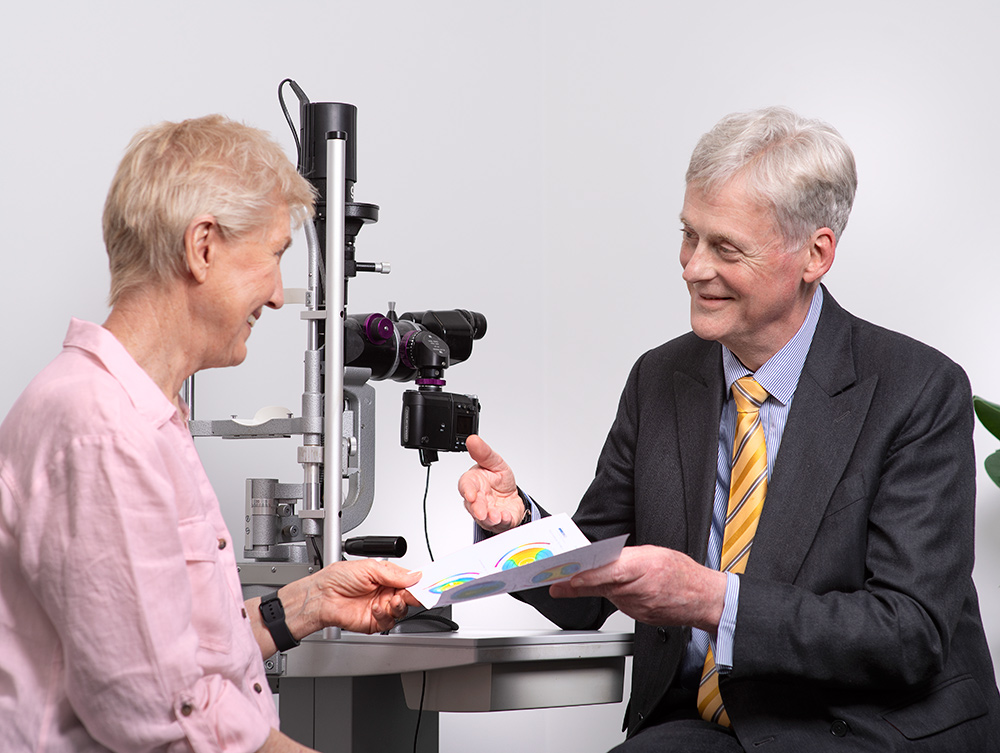
Diagnosing myopia involves more than simply confirming blurred distance vision. A comprehensive assessment checks your prescription, how your eyes focus and the overall health of key structures such as the retina and optic nerve. Where needed, baseline measurements may also be taken to help monitor changes over time, particularly in progressive or high myopia and to guide suitability for different treatment options.
Myopia Treatment Options
Myopia treatment is designed to improve distance vision and support long-term stability where possible. The most appropriate option depends on prescription strength, age, eye health findings and whether myopia is stable or progressing.
Glasses and Contact Lenses
Glasses and contact lenses remain the most common short-sightedness treatment. They help refocus light onto the retina, improving distance clarity for daily activities such as driving, work and school.
For children and teenagers, prescriptions may change over time, so regular reviews are important for maintaining clear and comfortable vision. For adults, vision correction may remain stable for years, although periodic reassessment can still be valuable.
Laser Vision Correction
Laser vision correction may be an option for some adults with stable myopia who are looking to reduce reliance on glasses or contact lenses. Suitability depends on factors such as corneal shape and thickness, prescription stability and overall eye health. A detailed pre-treatment assessment is essential to confirm whether laser vision correction is appropriate and safe and to support long-term visual outcomes.
Why Choose Us for Your Myopia Treatment
At Ashford Advanced Eye Care, myopia treatment in Adelaide is delivered through a comprehensive and patient-focused approach. Every assessment is centred on clinical accuracy, clear explanations and treatment planning that reflects the individual’s prescription, eye health and daily visual requirements.
Patients benefit from:
- Consultant-led care: Thorough assessment and continuity throughout the treatment journey.
- Advanced diagnostic capability: Detailed testing to support accurate prescriptions and long-term monitoring.
- Clear treatment guidance: Practical explanations of myopia treatment options, suitability and expected outcomes.
- Long-term vision focus: Management plans that prioritise both clear vision and ongoing eye health.
If you’re seeking treatment for short-sightedness, our team aims to provide structured, evidence-based care at every stage.
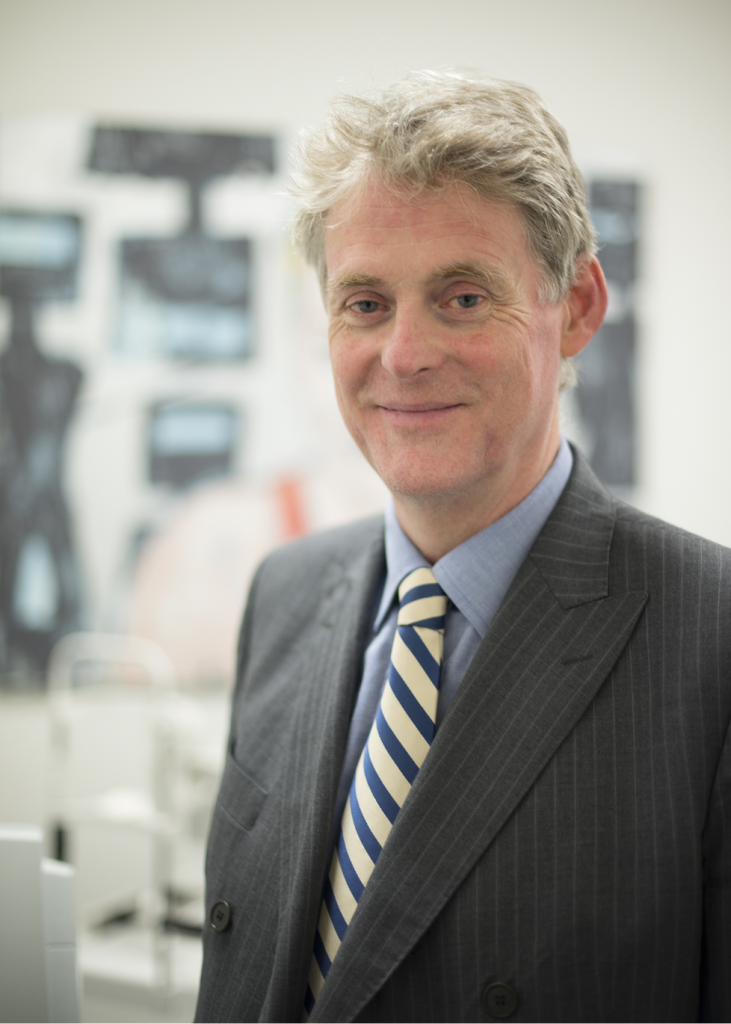
Meet Associate Professor Michael Goggin
Experienced in Corneal Cross-Linking for Keratoconus
Associate Professor Michael Goggin has extensive experience performing corneal cross-linking, a procedure used to help slow the progression of keratoconus. He carefully assesses suitability for treatment and guides patients through each stage of the process, with a strong focus on safety, clear communication, and informed decision-making.
His approach combines clinical precision with compassionate care, helping patients understand how cross-linking works, what to expect during recovery, and how the procedure fits into their overall eye care plan.
How to Book an Appointment
Booking an appointment for myopia treatment in Adelaide is simple and convenient. The clinic welcomes new patients and referrals for the diagnosis, treatment and management of myopia and related vision concerns.
Please note that consultation fees vary depending on the type of appointment and will be discussed at the time of booking. A referral from your GP or optometrist is also required for consultations to be eligible for Medicare rebates. Our team will guide you through this at the time of booking.
To arrange an appointment or referral:
- Call the clinic directly on Tel: 8293 2700
- Book online via the Book an Assessment page
- Submit a general enquiry through the Contact Us page
- Complete your details on the Referral Page to generate a referral form
Frequently Asked Questions
Can myopia get worse over time?
Yes. Myopia often progresses during childhood and teenage years as the eyes develop, then usually stabilises in early adulthood. Regular check-ups help track changes and ensure your vision correction remains accurate.
How often should myopia be checked?
This depends on age, prescription changes and overall eye health. Children and teenagers may need more frequent reviews, while adults with stable vision may only require periodic monitoring based on clinical advice.
Is myopia the same as astigmatism?
No. Myopia affects distance vision because light focuses in front of the retina. Astigmatism is caused by an irregular corneal shape, which can distort vision at both near and far distances. Some people can have both conditions.
Can laser vision correction treat myopia?
Laser vision correction may be suitable for some adults with stable myopia, depending on prescription strength, corneal measurements and eye health. A detailed assessment is needed to confirm if it is a safe and appropriate option.
What happens if myopia is left untreated?
Uncorrected myopia can make daily activities more difficult, including driving and seeing clearly at work or school. In higher levels of myopia, ongoing monitoring may also be important to support long-term eye health and detect any related changes early.
Ready to Take the Next Step?
Schedule a comprehensive consultation to discuss your Myopia treatment options.